Back Support & Seating Cushions

Lumbar pillows, coccyx cushions and ergonomic seating cushions for office chairs, car seats and home use.
Back support cushions that make sitting comfortable again

Cosymor's lumbar and coccyx cushions are shaped to support your lower back and relieve pressure on your tailbone during long hours at a desk, in the car, or anywhere else you sit for extended periods. High-density foam holds its shape through the day instead of flattening, so the support stays consistent from your first meeting to your last.

Related Categories

A lumbar support cushion is a curved cushion placed against your lower back to fill the gap between your spine and the back of a chair, keeping the natural inward curve of your lower back supported while you sit. If you spend long hours at a desk, in a car, or anywhere with flat or unsupportive seating, and notice your lower back aching or you're constantly shifting position, a lumbar cushion is worth adding.

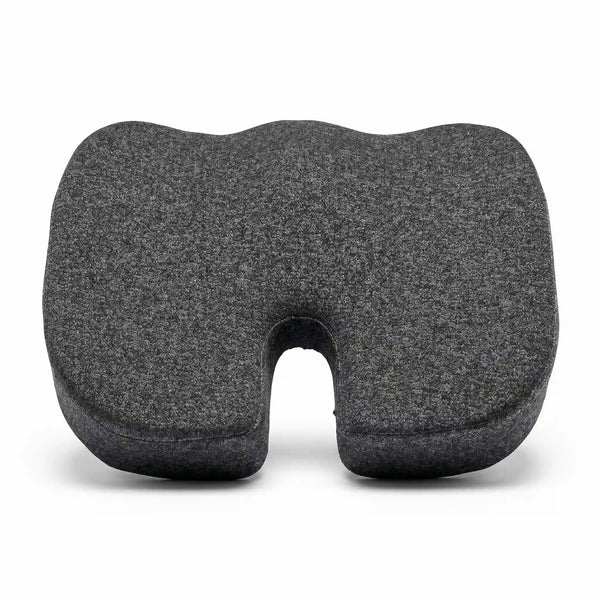
A coccyx cushion has a cut-out or U-shaped section at the back that lifts pressure off your tailbone while you sit, rather than pressing your full weight directly onto it. It's especially useful for people with existing tailbone pain or sensitivity, anyone recovering from a tailbone injury, and people who sit for long stretches on hard or unpadded seats, like drivers or desk workers.

Choose based on where your discomfort actually is. If the ache is in your lower back and you find yourself slouching or arching to compensate, a lumbar cushion is the better fit. If the pain is centred at your tailbone, especially when sitting on firm surfaces, a coccyx cushion's cut-out design targets that specific pressure point directly. Some people use both together for full lower-body support.

Yes. Cosymor's lumbar and coccyx cushions are sized to fit standard car seats and can be strapped or wedged in place for road trips and daily commutes alike. Since car seats often lack proper lower-back contouring, a cushion here can meaningfully reduce the fatigue and stiffness that build up on longer drives.

Most Cosymor lumbar cushions come with an adjustable elastic strap that wraps around the back of the chair and secures with a buckle or velcro closure, so it stays in place at the right height instead of sliding down through the day. No tools or permanent fixing are needed - it works on mesh, fabric and leather office chairs alike.

A wedge pillow is a triangular-shaped cushion that elevates part of your body at an incline instead of lying or sitting flat. Placed under your legs, it raises them above heart level to reduce swelling and improve circulation; placed under your back or torso, it elevates your upper body to ease acid reflux, snoring, or breathing difficulty. Cosymor's wedge pillow uses firm, high-density foam that holds its incline shape under sustained weight, unlike softer foams that compress flat over time.

Wedge pillows suit people managing acid reflux or GERD symptoms that worsen lying flat, anyone dealing with leg swelling or poor circulation who needs elevation, people recovering from surgery who need to keep a limb raised, and snorers who find an inclined sleeping position reduces symptoms. It's also useful for reading or working from bed, since the angled support keeps your back upright without extra pillows stacked behind you.

A good-quality lumbar or coccyx cushion typically holds its supportive shape for 2 to 3 years of daily use. Cosymor's high-density foam resists the flattening and sagging that lower-density cushions develop within months, so the support stays consistent well beyond the first year.

A back support cushion can meaningfully ease discomfort caused by poor sitting posture, long hours at a desk, or pressure on the tailbone - but it isn't a medical treatment for existing conditions like a slipped disc or chronic spinal issues. If you have a diagnosed back condition, use a cushion alongside your doctor's advice rather than as a replacement for it.

Regular use of a coccyx or lumbar cushion reduces direct pressure on your tailbone and keeps your lower spine in a more natural curve while seated, which helps prevent the slouching that causes end-of-day back and hip stiffness. Over time, this can mean less lower-back fatigue during long work or travel days, better posture without consciously correcting it, and noticeably less tailbone pain if you already sit on hard or unpadded surfaces for hours.