Rugs

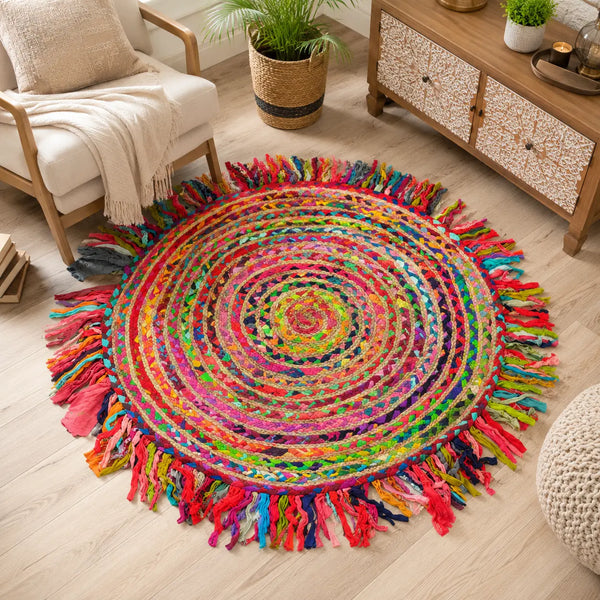
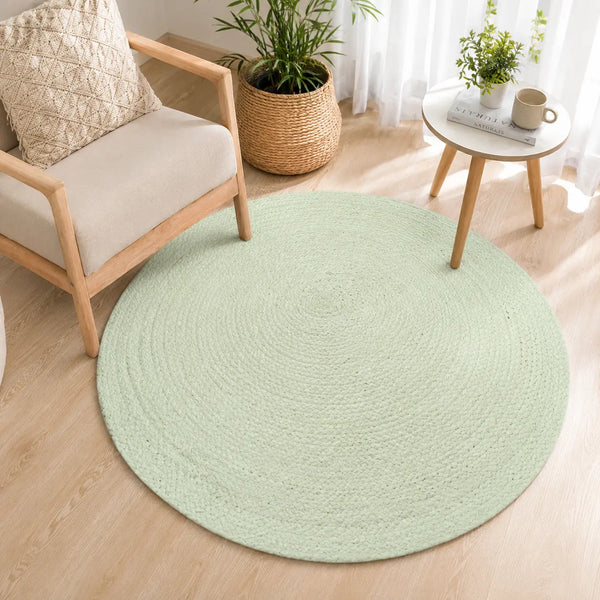
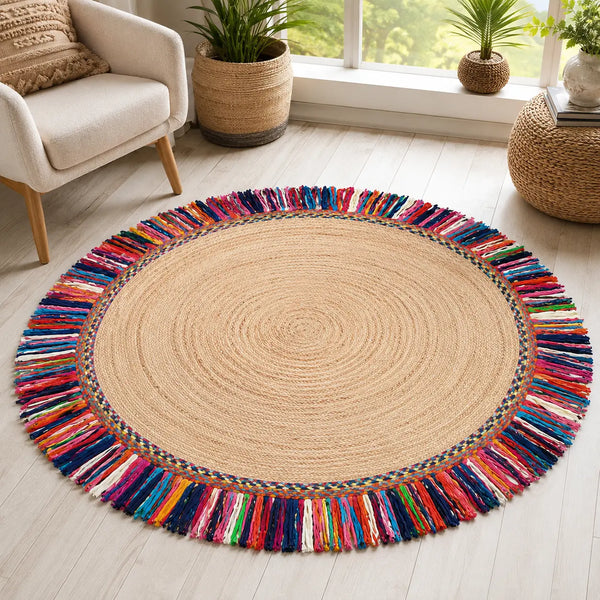
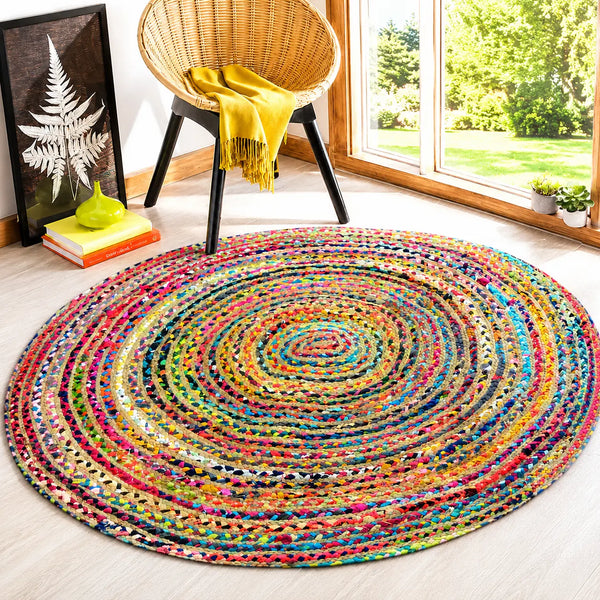
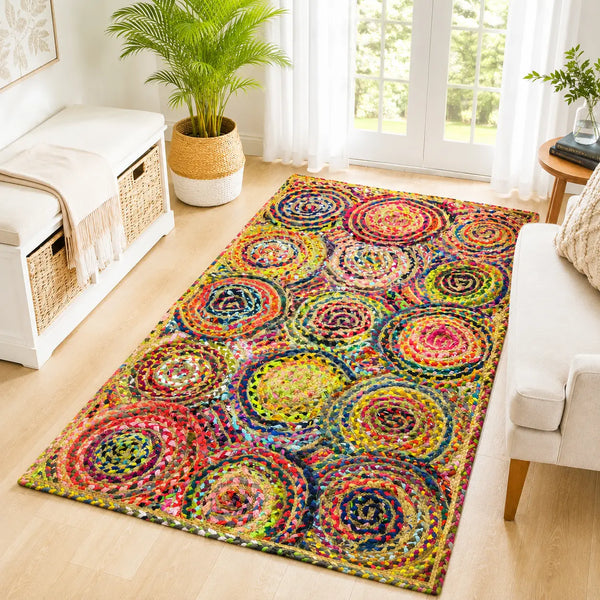
Handwoven jute, cotton and braided floor rugs — round and rectangle sizes for every room.
Filters

Handwoven rugs that fit your room and your floor

Cosymor's rugs are handwoven in jute, cotton and braided cotton, made in round and rectangle shapes to fit living rooms, bedrooms and entryways alike. Each rug is made by hand rather than machine-tufted, so you get natural texture variation and durability that holds up to daily foot traffic.

Related Categories

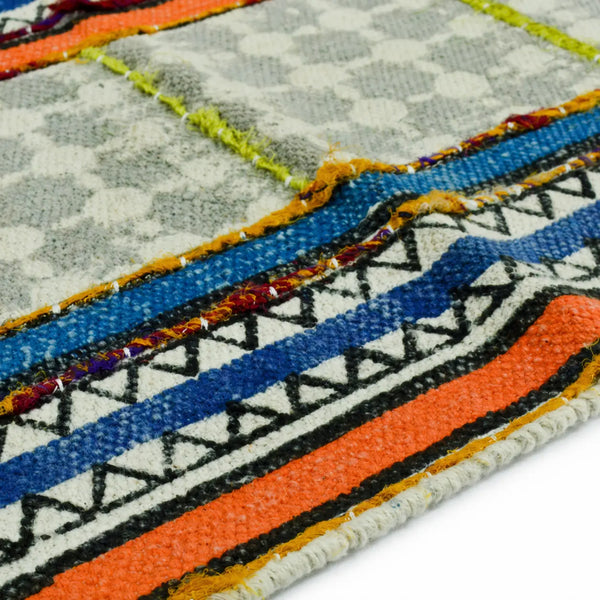
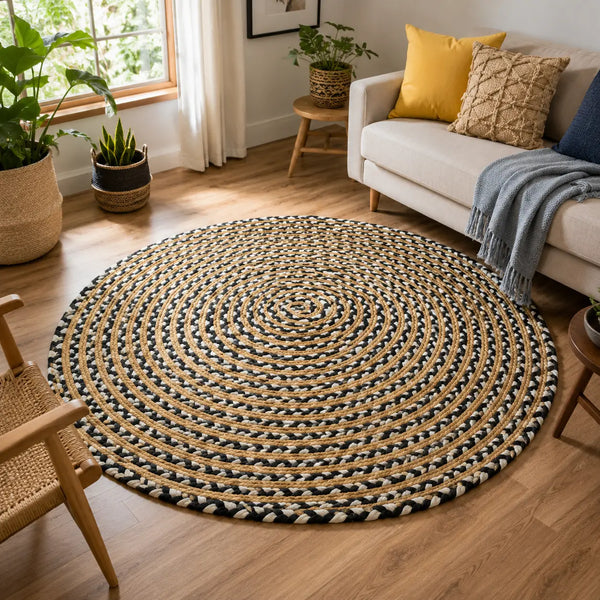
Jute rugs are woven from natural plant fibre, giving them a coarse, earthy texture and a warm, neutral tone that suits rustic or boho spaces. Cotton rugs are softer underfoot, take dye well for brighter colours and patterns, and are generally easier to wash. Braided rugs are made by twisting strips of fabric together into a thick, textured weave, offering more cushioning and a casual, layered look. Each material suits a different room and feel rather than one being universally better.

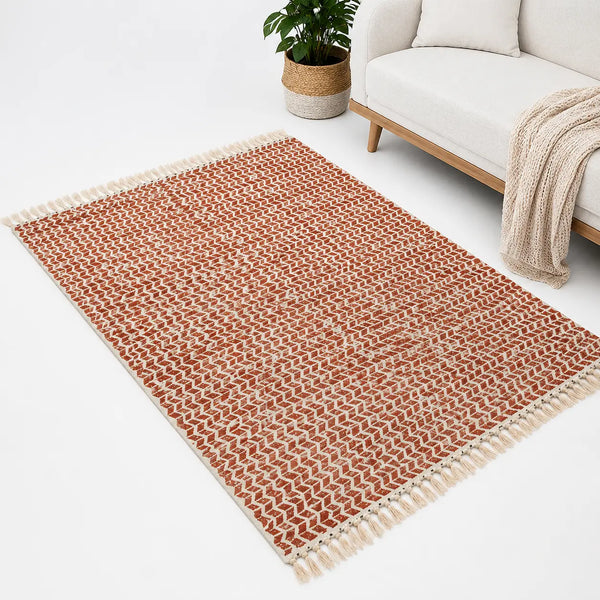
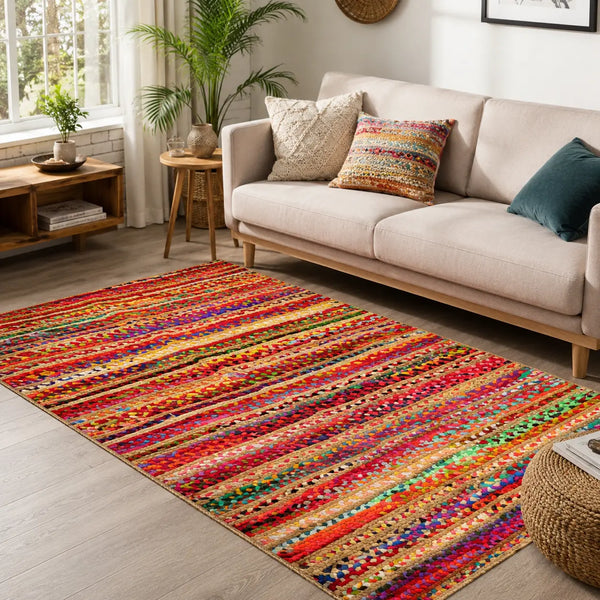
As a general rule, a living room rug should be large enough for at least the front legs of your sofa and chairs to sit on it, which visually anchors the seating area rather than leaving the rug floating in the middle of the room. For smaller living rooms, a 4x6 ft or 5x7 ft rug usually works; larger rooms with a full seating arrangement often need 8x10 ft or bigger to tie the space together.

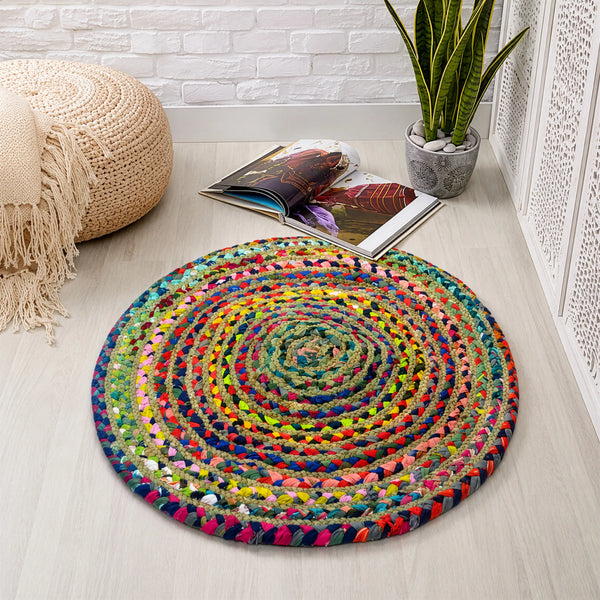
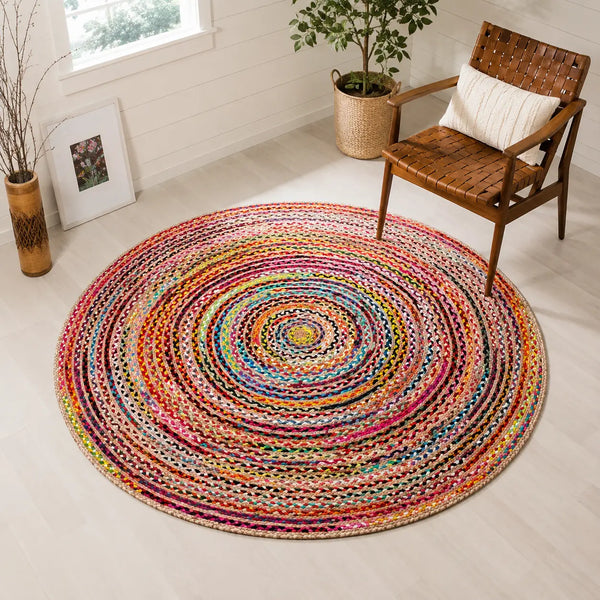
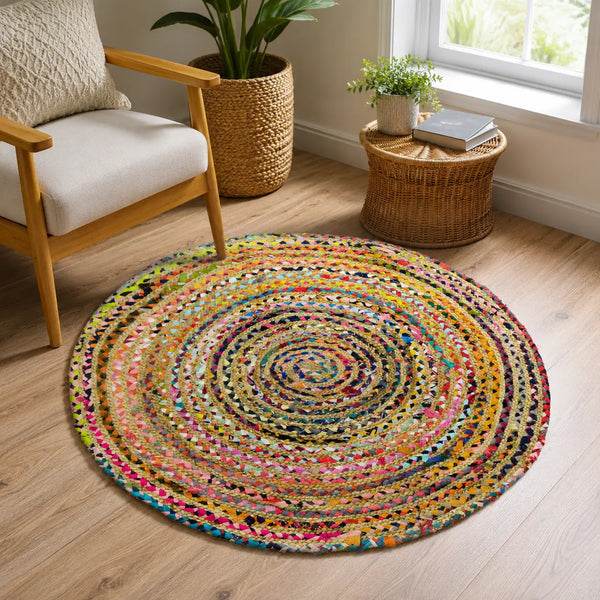
Round rugs work well under round tables, in reading nooks, or as a softening element in a room full of straight-edged furniture. Rectangle rugs are the more versatile default for living rooms and bedrooms, since they match the shape of most furniture arrangements and make it easier to anchor a full seating or bed area. If your room already has a lot of hard angles, a round rug can help break that up.

Beyond the obvious living room centrepiece, rugs work well layered under a coffee table to anchor a seating area, placed beside the bed for a soft first step in the morning, or used in an entryway to catch dirt before it spreads further into the house. Round rugs suit smaller defined spaces like reading nooks, while rectangle rugs work better anchoring larger open areas.

Cosymor's rugs are handwoven rather than machine-tufted - artisans work jute, cotton or braided cotton fibres into the rug by hand on traditional looms, a process that takes considerably longer than machine production but gives each rug its natural texture variation and tighter, more durable weave. No two handwoven rugs are ever completely identical, which is part of the character rather than a flaw.

Regular vacuuming (on a low-suction or no-beater-bar setting for delicate weaves) keeps dust and debris from settling into the fibres. For spills, blot immediately rather than rubbing, and spot-clean with a mild detergent and cold water. Most Cosymor rugs shouldn't go in a washing machine - check the specific product's care instructions, and air-dry flat rather than hanging, which can distort the shape.

Jute rugs handle moderate foot traffic well and are a popular choice for living rooms and hallways, but the natural fibre is more prone to wear and moisture damage than cotton or braided cotton in genuinely heavy-traffic or damp areas. For entryways exposed to rain or very high daily use, a braided cotton rug typically holds up better long-term.

Handwoven rugs generally outlast machine-made ones because the weave is tighter and adjusted by hand rather than a fixed machine tension. With regular vacuuming and occasional rotation to even out wear, a well-made jute, cotton or braided rug holds up for years even in moderately high-traffic areas like living rooms and hallways.

A dhurrie is a specific type of flatweave rug, traditionally handwoven in India from cotton or wool without a pile - it's thinner and reversible, unlike a plush pile rug. A carpet typically refers to wall-to-wall flooring that's fixed and covers an entire room, while a rug is a standalone floor covering you place over existing flooring and can move, layer or replace as you like. Cosymor's woven rugs sit in the dhurrie and flatweave family rather than thick pile carpets.

Some shedding is normal in the first few weeks of a new handwoven rug, especially with jute and wool-blend weaves, as loose fibres from the weaving process work their way out. Regular vacuuming resolves this within the first month or so of use; if shedding continues heavily beyond that, it's worth checking the specific product's care notes.

Cosymor's jute and cotton rugs aren't designed for consistently wet or high-moisture areas like bathrooms, since natural fibres can develop mildew or discolour with repeated moisture exposure. In kitchens, a rug can work in a dry zone away from the sink and stove, but spills should be cleaned up promptly to avoid staining or fibre damage.