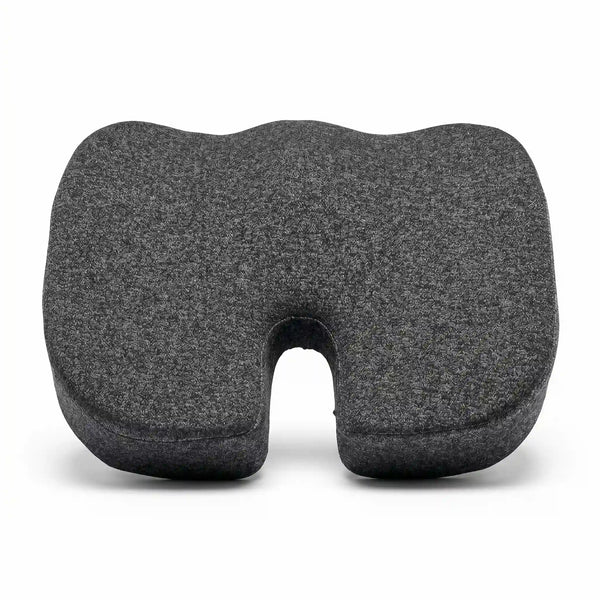
Ergonomic COCCYX Seat Cushion for Tailbone Pain Pressure Relief
★★★★★
Tailbone relief and posture support engineered for long hours of sitting. Long hours of sitting shouldn't mean pain. Our Premiu...
A research-based guide to contour and flat pillows — how each supports the neck, who they suit, common mistakes, and how to choose correctly.
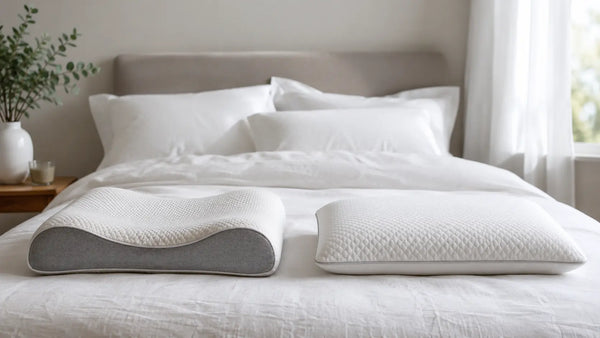
Somewhere around 2 a.m., most people have folded a pillow in half, punched it flatter, or dragged it under one shoulder, hunting for a shape their neck could actually rest in. By morning, they blame the mattress or their age. Often, the real cause is simpler: the pillow's shape doesn't match how they sleep.
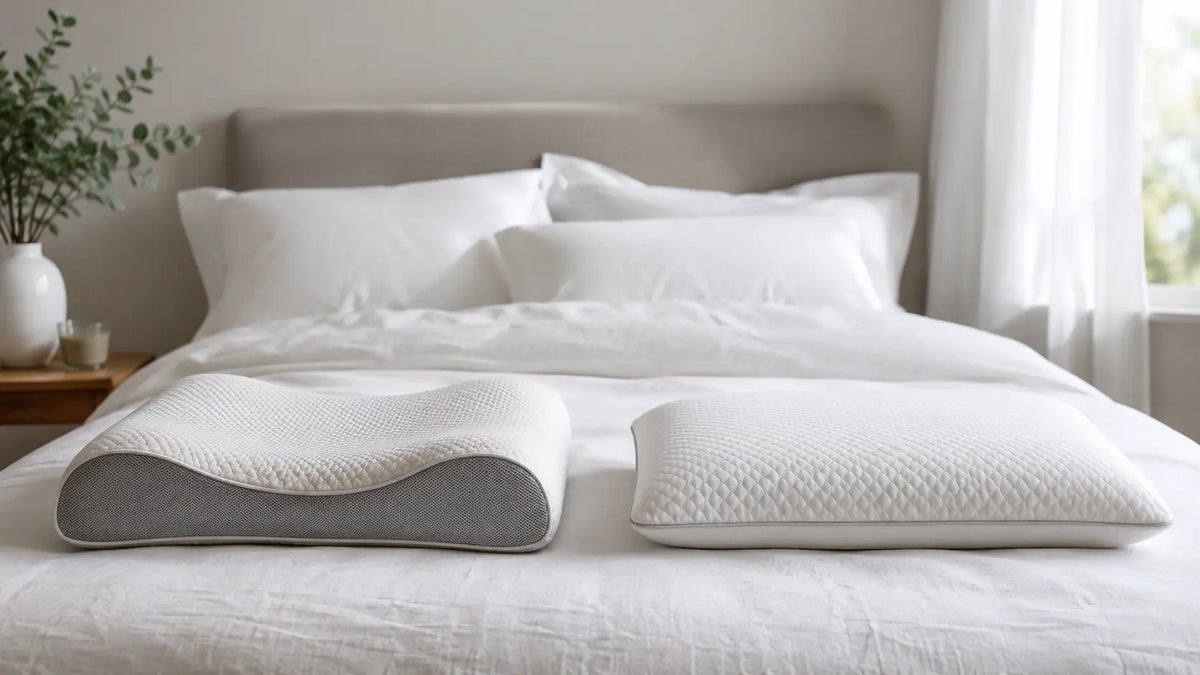
Pillows generally fall into two shapes: flat pillows, a uniform rectangular block, and contour pillows, moulded into a wave shape with a lower centre and raised sides. This guide is an honest, research-based comparison — not a sales pitch — to help you work out which one your neck actually needs.

A flat pillow is a single, even block of filling with no built-in shaping. Its strength is flexibility — because the surface doesn't force your head into one position, you can shift and turn more freely, which is why flat pillows are often better for people who change position through the night. Our Memory Foam Neck Pain Pillow is a good example of this even, adaptable style.
A contour pillow (also called cervical or butterfly pillow) has a lower central channel where the head rests and raised sections on either side that support the neck and, for side sleepers, fill the shoulder-to-head gap. Many are moulded from memory foam with two height zones, so one pillow can suit two needs depending on which side faces up — like our Orthopedic Contour Memory Foam Pillow.
Your cervical spine has a natural inward curve. During the day, muscles constantly adjust to balance your head over that curve; at night, they're supposed to switch off completely — which they can only do if the pillow holds your head and neck in roughly that same shape.
Research summarised across physiotherapy and sleep-science sources points to a consistent idea: pillow shape and height affect how much your neck muscles have to work while you sleep. Studies using EMG (muscle-activity) sensors have linked poorly fitting pillows to increased overnight muscle tension in the neck and shoulders — tension that shows up the next morning as stiffness.
Specific comparisons between contour and flat pillows generally find that contour designs improve cervical alignment for back sleepers when the lobe height matches their individual neck curve. A 2025 systematic review of five studies (239 participants) found contour foam pillows improved self-reported sleep quality and comfort compared with flat and feather pillows. But several of the same studies flag an important caveat: a wrongly sized contour pillow can align the neck worse than a decent flat one. Fit matters more than shape.
Waking up stiff every morning, easing after you move around — a classic sign the pillow, not a structural issue, is the cause. Pillow feels fine at first, then goes flat by 3 a.m. — usually low-density filling that compresses and doesn't spring back. One-sided neck or shoulder soreness — common in side sleepers, almost always a height mismatch. Headache at the base of the skull — often a pillow too high for a back sleeper, pushing the chin toward the chest. Diagnosed cervical conditions that feel worse each morning — this group is especially sensitive to pillow shape and often benefits from an orthopedic pillow along with guidance from a physiotherapist. Trouble adjusting to a new pillow — a genuine, temporary phase, not a sign the pillow is wrong.
| Feature | Flat Pillow | Contour Pillow |
|---|---|---|
| Shape | Uniform, even surface | Wave-shaped: lower centre, raised sides |
| Best sleep position | Back & combination sleepers | Side sleepers, consistent back sleepers |
| Adjustability | High — easy to reposition | Low — fixed shape, though often two heights |
| Learning curve | Minimal | 2–3 nights is common |
| Not ideal for | Side sleepers needing gap-fill | Stomach sleepers |
Flat pillow pros: flexible for changing positions, easier to adjust to immediately, simpler and often more affordable. Cons: less targeted support for the shoulder-to-head gap in side sleeping.
Contour pillow pros: fills the shoulder gap directly, holds shape consistently, often offers two height options. Cons: fixed shape can feel restrictive; wrong lobe height can worsen alignment; not suited to stomach sleeping.
Contour pillows give side sleepers targeted gap-filling exactly where the neck tends to sag, hold their structure more consistently through the night, and some designs — such as the Cervical Memory Foam Pillow — offer two heights for two needs. The limitation: none of this works if the lobe height doesn't match your shoulder width and neck curve.
Flat pillows give combination sleepers freedom of movement, usually need no adjustment period, and are the safer, more neutral option for stomach and light-back sleepers. The limitation: they provide no structural gap-fill for side sleeping, so if that's your main position, a flat pillow may not do enough on its own.
1. What is your primary sleep position? Mostly on your side — lean toward a contour pillow sized to your shoulder gap. Mostly on your back — either shape can work, with a gentle centre dip often preferred. Mostly on your stomach — flat, thin pillow is safer. Move around a lot — a flat, responsive pillow usually suits you better.
2. Do you have a diagnosed neck condition? Structured contour support is commonly recommended by physiotherapists for cervical spondylosis or disc issues — but the correct height for your specific curve matters more than brand or price, so it's worth discussing with a professional.
3. What height do you need? As a general starting point, side sleepers often need a height roughly equal to the shoulder-to-mid-neck distance — commonly 10–15cm for adults, varying with shoulder width and mattress softness. Back sleepers generally need noticeably less.
4. Does the material hold up under sustained weight? Try the fist test: press your fist into the pillow, lift it away, and time the recovery. Faster recovery generally signals a higher-density memory foam pillow.
5. Are you switching from a very different pillow type? Ease in with naps or partial nights before committing to a full night, so your neck muscles can adapt gradually.

Cleaning: most memory foam pillows shouldn't be fully submerged or machine-washed — wash the removable cover regularly and spot-clean the foam with a lightly damp cloth, air-drying fully before use. Storage: use a breathable cotton bag rather than sealed plastic, which can trap moisture. Expected lifespan: fibre pillows around 1 year, standard foam around 2 years, higher-density memory foam roughly 3–5 years with reasonable care. Mistakes to avoid: don't compress foam into a tight suitcase for long periods, avoid prolonged direct sunlight, and don't ignore the fist test — a pillow that no longer bounces back is no longer doing its job.
Neither is universally better — it depends on sleep position, body shape, and whether the pillow's height matches your neck curve.
Yes, if the lobe height doesn't match your shoulder width or neck curve. Correct sizing matters more than shape alone.
Most people need two to three nights. Discomfort continuing well beyond a week suggests the height or firmness isn't right for your body.
Generally a contour or elevated pillow that fills the shoulder-to-head gap, since flat pillows often lack enough height for this position.
Both can work, provided the height keeps the neck neutral — not pushing the chin down or tipping the head too far back.
Generally no — a very thin, flat pillow (or none) tends to be safer, since contour lobes can cause hyperextension face-down.
If stiffness is worst on waking and clearly eases within an hour of moving, the pillow is a likely contributor.
No. Firmness is about feel; support is about whether the pillow holds a neutral neck position without collapsing.
Roughly 1 year for fibre, 2 years for standard foam, 3–5 years for higher-density memory foam.
Possible, but combination sleepers often find a flat or lightly contoured pillow easier to move with.
Some people report fewer tension headaches after switching to a properly fitted contour pillow, though results vary by individual.
Standard memory foam can retain more heat than fibre, particularly in humid climates; ventilated designs like the Cooling Memory Foam Pillow address this with a mesh airflow band.
Generally no — the foam core shouldn't be soaked. Wash the cover and spot-clean the foam instead.
"Contour" describes the shape; "cervical" describes the intent. Most cervical pillows are contoured, and most contoured pillows target cervical support.
Yes, if you have a diagnosed condition or ongoing pain — individual anatomy varies, and a pillow alone isn't a substitute for medical guidance.
| Myth | Fact |
|---|---|
| The firmest pillow is always healthiest. | Support depends on shape and height matching your neck curve, not firmness alone. |
| Contour pillows work for everyone. | They help many back/side sleepers but can worsen alignment if height is wrong, and don't suit stomach sleeping. |
| Shop-comfort predicts night-long comfort. | Short-term feel and 8-hour support are different; a real trial period is more reliable. |
| Once you find your pillow, you never need to change it. | Sleep position, weight and mattress change over years, which can shift what height or shape works. |
| Flat pillows can't support the neck properly. | A well-chosen flat pillow at the right height works well for back and combination sleepers. |
Neither shape is objectively best — the right choice depends on how you actually sleep. Side sleepers generally benefit from a contour shape that fills the shoulder gap, provided the height matches their build. Back sleepers can do well with either shape if the height keeps the neck neutral. Stomach sleepers are usually better served by a thin, flat pillow. And combination sleepers often find a flat, responsive pillow easier to live with. The research is consistent on one point above all: fit matters more than shape.
This article is general information, not medical advice. Persistent or severe neck pain should be assessed by a doctor or physiotherapist.
Tailbone relief and posture support engineered for long hours of sitting. Long hours of sitting shouldn't mean pain. Our Premiu...
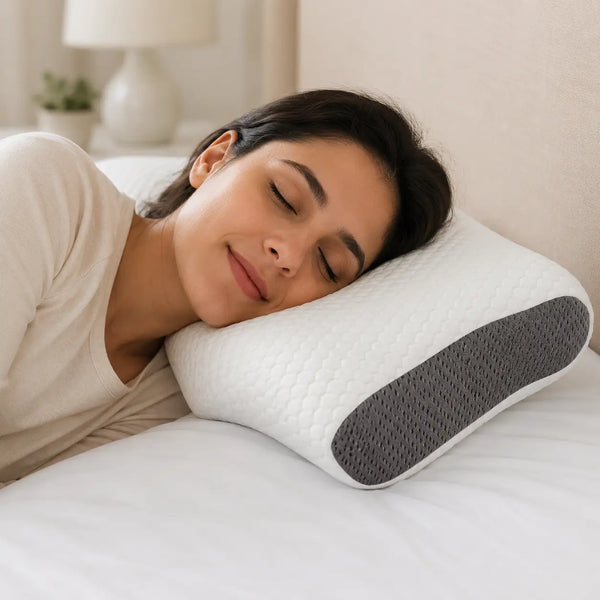
Orthopaedic contour design that supports your cervical spine all night long. If you wake up every morning with a stiff neck, so...
We value your privacy
We use cookies to run the store, remember your preferences and understand how the site is used. Read our Privacy & Cookie Policy.
Functional cookies
Required for the store to work — your cart, checkout and security. These can't be switched off.
Analytical & marketing cookies
Let us measure how the store is used and show you relevant offers — Google Analytics, Meta Pixel and Microsoft Clarity.