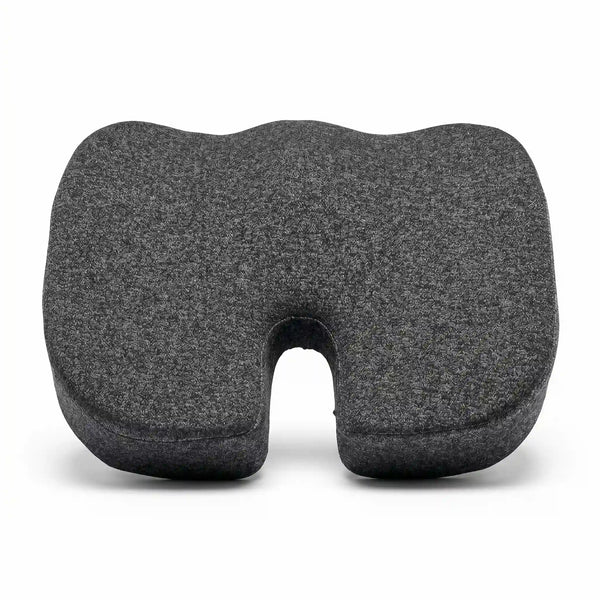
Ergonomic COCCYX Seat Cushion for Tailbone Pain Pressure Relief
★★★★★
Tailbone relief and posture support engineered for long hours of sitting. Long hours of sitting shouldn't mean pain. Our Premiu...
A full guide to mosaic glass tealight candle holders — what they are, how they're made, the history of candlelight ambiance, and how to style a set of four for your dining table.
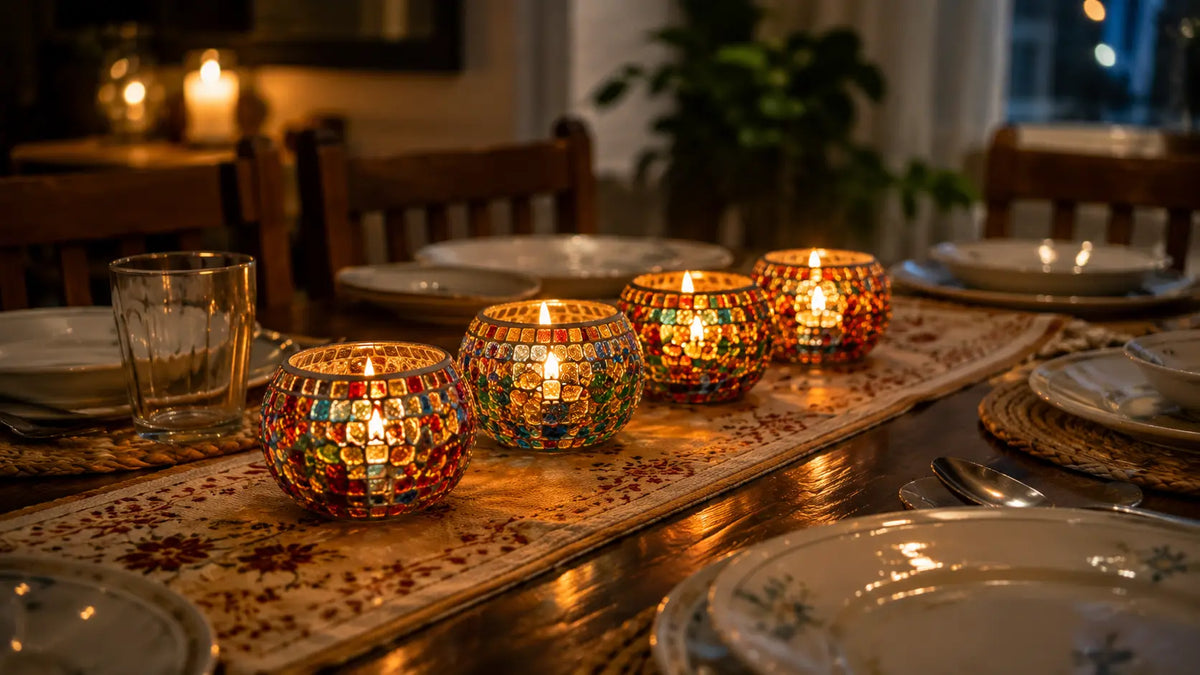
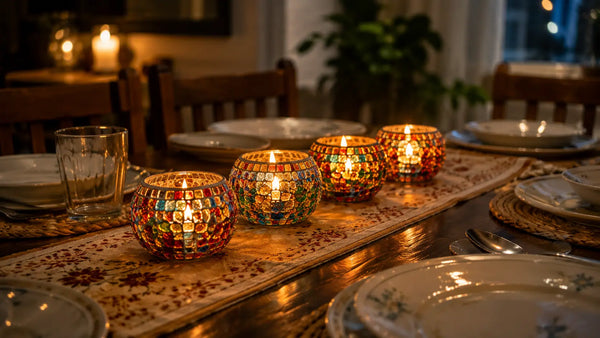
Turn off the main light over a dining table and switch on a few candles instead, and something changes that's hard to name but easy to feel. Conversation slows down. People linger longer. The same meal feels like an occasion instead of a routine. This isn't just atmosphere talk — it's a real effect of how light shapes a room, and mosaic glass tealight holders are one of the most effective, low-cost ways to create it. Here's the complete picture: what these pieces actually are, how they're made, and how to use a set of four well.
A mosaic glass tealight holder is a small candle vessel built from many individual pieces of coloured glass, hand-set into a pattern around a frame that holds a standard tealight candle. Unlike a plain glass votive, which is a single uninterrupted surface, a mosaic holder is deliberately broken into fragments — and that fragmentation is exactly what makes it work. When candlelight passes through dozens of small, differently coloured or textured glass pieces instead of one flat pane, the light scatters in many directions at once, throwing small, shifting pools of colour onto the surrounding surface rather than a single beam.
Candle holders are far older than decoration. Long before electricity, they were essential tools — a way to keep an open flame stable, safe, and useful for light through the night. Early versions were simple clay or metal dishes; over centuries, as glasswork and metalwork advanced, candle holders became more decorative, eventually becoming genuine artistic objects in their own right rather than purely functional ones. Mosaic glasswork specifically draws on a much older decorative tradition — the art of assembling small coloured glass or tile fragments into a larger image or pattern, a technique used in architecture and religious buildings for centuries before it found its way onto a tabletop candle holder.

The process starts with sheets or offcuts of coloured glass, which are cut into small, irregular or geometric pieces by hand. Each piece is then set, one at a time, onto a frame or vessel shape — often using an adhesive and grout technique similar to traditional mosaic tilework — building up a pattern such as a floral motif, a geometric repeat, or an abstract cluster of colour. Because each piece is placed individually, the exact arrangement of colour and light varies slightly from one holder to the next, even within the same design pattern. This is part of why handcrafted mosaic pieces have a subtly different character than a mass-produced, moulded glass candle holder — no two throw quite the same pattern of light.
Most homes rely on a single bright, even overhead light source — practical for tasks, but flat for atmosphere. Interior designers commonly describe good lighting as layered: a mix of light sources at different heights and intensities that create depth, shadow, and warmth, rather than one flat wash of brightness. Candlelight is one of the simplest ways to add a layer of warm, low, ambient light without any wiring or renovation — which is exactly why it remains popular even in homes with excellent electric lighting, alongside other layered pieces like a hanging mosaic pendant lantern.
There's also a practical reason candlelight specifically feels different: its colour temperature is warm and its light constantly flickers very slightly, both of which read as more relaxing and less clinical to the eye than a steady, cool electric bulb. Combine that warm, moving light with the scattering effect of mosaic glass, and you get a genuinely different visual experience than a plain candle in a plain holder — more texture, more colour, more movement across the room.
The dining table looks “set” but not inviting. This usually isn't about the food or the plates — it's about lighting. A perfectly plated meal under a harsh overhead light can still feel clinical.
A single candle in the centre feels lonely rather than atmospheric. One point of light on a long table draws the eye to an empty expanse around it, rather than filling the space with warmth.
Overhead lighting doesn't dim, and there's no other option. Many rental flats and older homes have a single ceiling fixture without dimming, making low-cost, no-wiring light sources like candles genuinely useful rather than just decorative.
Candle decor feels like an “event-only” thing. Many people only bring out candles for a special occasion, missing the simpler use case of quietly upgrading an ordinary weekday dinner.
| Style | Light effect | Best placement |
|---|---|---|
| Floral mosaic pattern | Soft, varied colour scatter | Dining table centrepiece, festive settings |
| Geometric / tribal pattern | Sharper, more structured light pattern | Console tables, modern or eclectic interiors |
| Round bubble mosaic | Playful, rounded light dots | Balconies, outdoor evening seating |
| Leaves-circle mosaic | Uniform warm glow, botanical detail | Minimalist or nature-inspired interiors |
A single candle holder is a point. A set of mosaic tealight holders spaced evenly down the centre of a table becomes a line of light — and a line reads as intentional in a way a single point doesn't. Visually, it also solves the “lonely candle” problem: instead of one small glow surrounded by table, the light is distributed across the length of the table, so no seat feels far from a source of warmth. Practically, four tealights also simply produce more usable light than one, without needing to introduce a bright bulb that would undo the atmosphere they're creating.
They add warmth without renovation. No wiring, no dimmer switch installation — just candlelight, which makes them genuinely useful for rented homes or older buildings with fixed lighting.
The handcrafted variation adds character. Because each piece is hand-set, the exact pattern of scattered light is unique to that holder, which is part of the appeal for people who value handmade objects over mass-produced ones.
They work for everyday use, not just events. A set of four is inexpensive enough and low-effort enough to use on an ordinary weeknight, not only for special occasions.
Limitation to be honest about: mosaic glass candle holders provide ambient, not functional, light — they're not a replacement for actual task lighting if you need to read or work at the table. They're also, obviously, an open-flame product, which comes with the safety considerations covered below.
1. Match the set size to your table length. For a four- to six-seater table, a set of four spaced evenly down the centre generally provides balanced coverage without crowding.
2. Consider your existing colour palette. A multicoloured floral mosaic pairs well with neutral tableware; a single-tone mosaic suits a room with an already busy palette elsewhere.
3. Think about placement beyond the table. The same holders that work as a table centrepiece also work grouped on a console or shelf — useful if you want flexibility rather than a fixed dining-only piece.
4. Check the tealight fit. Standard tealights (usually around 3.8cm diameter) fit most mosaic holders; always check this before buying scented or oversized candles that may not sit properly.
5. Decide indoor vs. outdoor use. If you want to use the set on a balcony or patio, look for a sturdier glass construction, since outdoor use exposes the piece to more temperature variation and handling. A Moroccan mosaic lantern can add height and drama to an outdoor grouping too.

Cleaning: Wipe the glass gently with a dry or lightly damp soft cloth once the holder has fully cooled. Avoid abrasive scrubbing on the mosaic surface, which can loosen individual glass pieces over time. If wax drips onto the glass, let it harden fully, then gently lift it off rather than scraping while soft.
Storage: Store in a padded box or wrapped individually if not displayed daily, since the individual glass pieces can chip if knocked against hard surfaces.
Expected lifespan: With careful handling, a well-made mosaic glass holder can last for years — the glass itself doesn't degrade, though the setting adhesive can weaken with rough handling or repeated exposure to extreme heat over a very long period.
Mistakes to avoid: Don't place mosaic holders in a dishwasher or submerge them in water, since this can loosen the adhesive holding the glass pieces in place. Don't use oversized or scented pillar candles not designed for tealight-sized vessels. And always let a candle burn out naturally or extinguish it safely rather than blowing hot wax onto the mosaic surface.
Always use tealights sized for the holder, never leave a lit candle unattended, keep candles away from curtains, table runners, and anything flammable, and let the glass cool fully before moving or handling it. Basic precautions like these make candlelight decor genuinely safe for regular, everyday use.
Standard tealight candles, typically around 3.8cm in diameter, fit most mosaic holders. Always check the specific holder's opening before buying larger or scented candles.
Yes, with normal open-flame precautions — never leave them unattended, keep them away from flammable fabric, and let the glass cool before handling.
Wipe gently with a dry or lightly damp cloth once fully cooled. Avoid submerging in water or dishwashing, which can loosen the glass-setting adhesive.
Many can be used outdoors, though a sturdier construction is preferable for regular outdoor exposure to temperature changes and handling.
Because it's made of many small, differently angled and coloured glass pieces rather than one flat surface, light passing through breaks into multiple small coloured patterns instead of one beam.
For most four- to six-seater tables, a set of four spaced evenly down the centre provides balanced light coverage without crowding the table.
They work well for everyday use — low cost and low effort make them a simple way to warm up an ordinary meal, not just a special one.
Plain glass holders let light pass through as one continuous glow; mosaic glass is deliberately fragmented, scattering light into many small coloured patterns across nearby surfaces.
Let dripped wax harden fully, then gently lift it away rather than scraping while soft, to avoid disturbing the glass setting.
They require slightly more careful handling since individual glass pieces are set with adhesive, but with normal care they hold up well over years of use.
Even spacing down the centre generally works best, ensuring no seat is far from a light source, rather than clustering all the holders in one spot.
Yes — mixing two or three complementary patterns (such as floral and geometric) can add visual depth when grouped on a shelf or console.
The glass itself doesn't fade, though prolonged direct sunlight can affect any painted or coated elements on certain designs.
No — lit candles should never be left unattended, even during a gathering. Keep an eye on them and extinguish safely once you're finished.
Its warm colour temperature and natural, gentle flicker read as more relaxing than the steady, cooler light of most electric bulbs, which is part of why it's associated with calmer, more intimate settings.
| Myth | Fact |
|---|---|
| Candle decor is only for special occasions. | Low-cost tealight sets are practical for everyday dinners, not just events. |
| One candle in the centre is enough for any table. | A single point of light on a long table leaves the ends dim; even spacing works better. |
| Mosaic glass holders are too fragile for regular use. | With basic care (no dishwashing, gentle handling), they hold up well over years. |
| All candle holders produce the same quality of light. | Mosaic glass specifically scatters light into varied colour patterns that plain glass doesn't produce. |
| Bigger candles are always better. | Oversized candles in small holders can overheat the glass; matching candle size to the holder matters more. |
Mosaic glass tealight holders work by doing something simple but effective: breaking candlelight into many small, coloured, shifting patterns instead of one flat glow. That scattering effect, combined with the warm and gently flickering nature of candlelight itself, is a large part of why a dinner under candlelight feels different from the same meal under an overhead bulb. A set of four, spaced evenly, solves the common problem of a single lonely candle on a long table and turns a point of light into a line — giving every seat a share of the warmth. They're inexpensive, require no wiring or renovation, and with basic care and normal candle safety, work just as well for an ordinary Tuesday dinner as they do for a celebration.
Always follow basic open-flame safety precautions when using any candle product.
Tailbone relief and posture support engineered for long hours of sitting. Long hours of sitting shouldn't mean pain. Our Premiu...

Orthopaedic contour design that supports your cervical spine all night long. If you wake up every morning with a stiff neck, so...
We value your privacy
We use cookies to run the store, remember your preferences and understand how the site is used. Read our Privacy & Cookie Policy.
Functional cookies
Required for the store to work — your cart, checkout and security. These can't be switched off.
Analytical & marketing cookies
Let us measure how the store is used and show you relevant offers — Google Analytics, Meta Pixel and Microsoft Clarity.