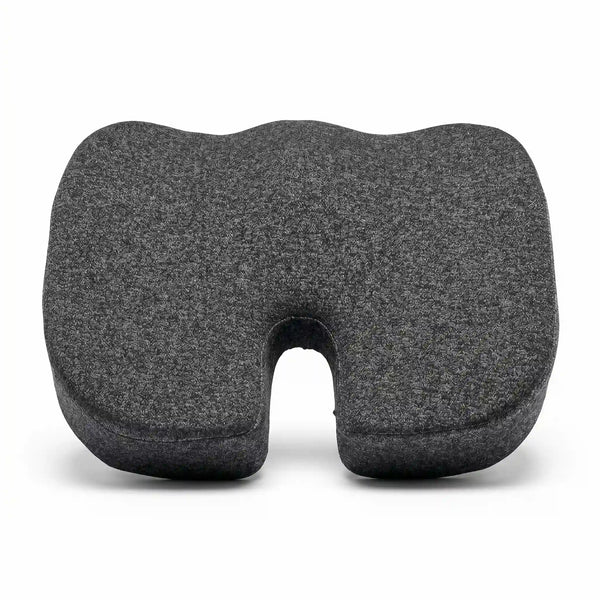
Ergonomic COCCYX Seat Cushion for Tailbone Pain Pressure Relief
★★★★★
Tailbone relief and posture support engineered for long hours of sitting. Long hours of sitting shouldn't mean pain. Our Premiu...
An in-depth, research-based guide to jute as a material and how a round jute rug can anchor a small reading corner — history, craft, care, and honest buying guidance.
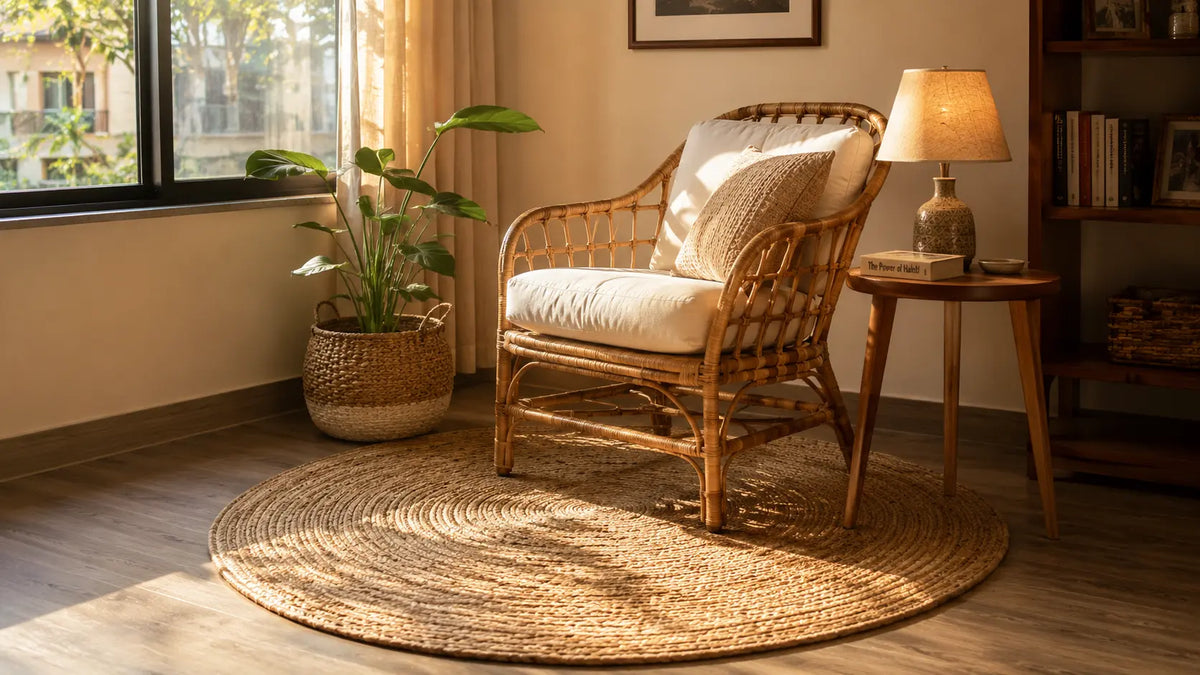
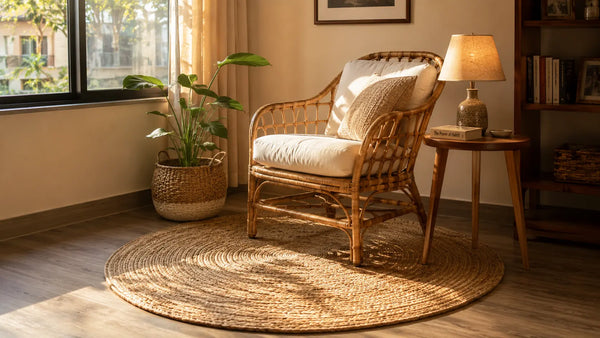
Almost every home has one: a chair pushed into a corner, meant for reading, that somehow never gets sat in. The chair is fine. The light might even be good. What's usually missing is something underfoot that tells your body “this is a place to settle,” not just a spot furniture happens to occupy. A round rug does exactly that job, and jute happens to be one of the best materials for it. Here's the complete picture — what jute actually is, how it's made, and how to use it well.
Jute is a natural plant fibre extracted from the stem of the Corchorus plant, grown mainly in the Ganges Delta region of India and Bangladesh, which together account for over 85% of the world's jute supply. It has been cultivated and used for textiles for thousands of years, with historical records placing its use as far back as the Indus Valley Civilisation. Jute rope, sacking, and cloth were used for everything from bags to sarees to religious items, and by the 19th century jute had become a major global commodity that shaped the economy of Bengal.

The process starts in the field. Jute plants grow remarkably fast — reaching maturity in just four to six months, sometimes growing several feet in that window — which makes it a highly renewable crop compared to slower-growing fibres. Once harvested, the stalks are bundled and submerged in water for a process called retting, which lets natural bacteria loosen the fibres from the woody stem. After retting, workers strip the fibres out by hand, wash them, and dry them in the sun.
The dried fibre is then spun into a thick, strong yarn. For rugs, this yarn is either woven on a handloom or, in the case of braided styles, twisted into long ropes that are coiled into a spiral and hand-stitched into a round shape — the technique behind our handwoven jute rug. Because the entire process — from stripping to braiding — is typically done by hand by skilled artisans, small irregularities in thickness and tone are common. These aren't flaws; they're the visible signature of handwork, the same reason no two handwoven rugs are perfectly identical.
Jute earns its reputation as one of the most sustainable natural fibres for a few concrete reasons. It requires very little water to grow — significantly less than cotton — and needs minimal to no pesticides. It's fully biodegradable, meaning a jute rug that reaches the end of its life breaks down naturally rather than sitting in a landfill for decades, unlike synthetic rugs made from petroleum-based fibres. And during its growing cycle, the jute plant absorbs a meaningful amount of carbon dioxide from the air, which is part of why the crop is sometimes referred to as environmentally regenerative rather than simply low-impact.
The corner looks empty even with furniture in it. This is almost always a flooring problem, not a furniture problem — bare tile or wood doesn't visually separate a corner from the rest of the room, so the eye reads it as leftover space rather than a defined spot.
Rugs that are too small make a room look smaller. A tiny rug floating in the middle of a large floor draws attention to how much bare floor surrounds it, which paradoxically makes the space feel less finished, not more.
Synthetic rugs shed microplastics and trap heat. This is a genuine, documented downside of many budget synthetic rugs, and it's a large part of why natural fibres like jute have seen a resurgence in interest.
Rugs in humid climates that develop a musty smell. This usually isn't the fibre's fault — it's a sign of trapped moisture underneath, often from placing a rug directly on a damp floor without airflow.
| Type | Texture | Best For | Consideration |
|---|---|---|---|
| Braided round jute | Chunky, rope-like, very tactile | Living rooms, reading corners, entryways | Coarser underfoot — lovely with bare feet, less so for crawling infants |
| Flatwoven jute | Smoother, tighter weave | Under furniture, dining areas | More even surface, slightly less rustic look |
| Jute-sisal blend | Firmer, more structured | High-traffic zones | Very durable, slightly less soft than pure jute |
| Jute-cotton blend (chindi) | Softer, colourful accents | Bedrooms, layering over plain jute | Less durable long-term than pure jute alone |
Our own range spans a similar spread — from the tightly woven Jute-Sisal Round Rug for firmer, high-traffic support, to softer chindi rugs that blend recycled cotton into the weave for extra colour.
A rectangular rug reads as "flooring" — it extends the sense of the room's general surface. A round rug reads as a place. Its contained shape gives the eye a clear boundary, so even a single chair sitting on it feels like it belongs to a defined little room within the room, rather than a chair that happens to be near a wall.
This matters more than it sounds. In interior design, this effect is sometimes described as "anchoring" — a rug visually pins the furniture group together and separates it from the rest of an open floor plan, which is exactly the situation most apartment living rooms are in. A 4ft round jute rug is large enough to sit a chair and a small side table comfortably within its edge, while staying compact enough to fit in almost any corner without overwhelming it.
Durability under regular use. Jute's coarse fibre structure holds up well to daily foot traffic, which is why it's commonly recommended for living rooms and other frequently used spaces.
Breathability in humid climates. Because jute is a natural, loosely structured fibre, it doesn't trap moisture the way some synthetic backings do, which matters in warm, humid regions.
A warm, grounding visual texture. The natural golden-brown tone and visible weave add warmth to hard flooring in a way that's hard to achieve with a flat synthetic surface.
Limitation to be honest about: jute isn't the softest fibre underfoot compared to wool or cotton, and it's less forgiving for spaces with small crawling children or for very high-moisture areas like bathrooms. Households wanting a softer feel might prefer a cotton rug instead, or layer one over a jute base. It also isn't ideal for rooms that get regularly soaked, since prolonged dampness can affect the fibre over time.
1. Measure the actual corner, not the room. For a reading nook, measure the footprint of the chair plus a small side table, and choose a round rug at least as large as that combined footprint — typically 3–4ft for a single chair setup.
2. Check the weave density, not just the price. Run your hand across the surface. A denser, tightly braided or woven jute rug will feel firmer and more substantial than a loosely spun one, and will generally last longer.
3. Consider the room's humidity level. In consistently humid rooms, look for a rug with some breathability in its backing (or no backing at all, as with hand-braided styles), rather than a rug with a fully sealed rubber backing that can trap moisture underneath.
4. Decide between braided and flatwoven based on feel preference. Braided rugs have a chunkier, more textured feel; flatwoven jute is smoother and slightly easier to keep clean of fine dust.
5. Think about what sits on top of it. A busy patterned chair or cushion cover pairs well with a plain natural jute rug, while a simple chair can carry a jute rug with subtle pattern variation.
Cleaning: Regular light vacuuming (on a lower suction setting, since aggressive suction can pull at natural fibres) or shaking out smaller rugs outdoors keeps dust from settling into the weave. Blot spills immediately with a dry cloth rather than rubbing, since rubbing can push liquid deeper into the fibre. Avoid soaking jute in water, as it dries slowly and can develop odour or mildew if left damp for too long.
Storage: If storing a jute rug for a season, roll it (rather than folding) to avoid creasing the fibres, and keep it somewhere dry with airflow.
Expected lifespan: A well-made, densely woven jute rug in a moderate-traffic area can reasonably last several years with regular care. Lifespan drops significantly in consistently damp conditions or under heavy daily foot traffic without a protective rug pad.
Mistakes to avoid: Don't machine-wash jute. Don't place it in direct, prolonged sun exposure, which can dry and weaken the fibres over time. And don't ignore early fraying at the edges — a small loose thread trimmed early prevents larger unravelling later.
Yes — jute is a naturally durable fibre well suited to moderate-to-high foot traffic, which is part of why it's commonly recommended for living rooms and entryways.
Jute breathes reasonably well, but prolonged, standing moisture (rather than normal ambient humidity) can weaken the fibre or cause odour over time. A rug pad and good airflow underneath help prevent this.
It's not generally recommended for consistently wet areas like bathrooms, since sustained moisture exposure isn't ideal for the fibre.
Light, low-suction vacuuming or shaking out, plus blotting (not rubbing) spills immediately. Avoid soaking or machine washing.
They have a distinctive, slightly coarse rope-like texture — pleasant for many people, though less plush than a cotton or wool rug. Braided styles feel softer than tightly flatwoven ones.
Generally 3–4ft is enough for a single chair and small side table, as long as the chair's front legs sit within the rug's edge.
It grows quickly with minimal water and no pesticides, is fully biodegradable, and absorbs carbon dioxide during its growing cycle, unlike petroleum-based synthetic fibres.
Some initial shedding of loose fibres is normal, especially with braided styles, and typically reduces after the first few weeks of use and vacuuming.
Natural fibres generally tolerate mild radiant heat, but very high or prolonged heat can dry and weaken the fibre over years — check with the specific rug's care guidance if you have underfloor heating.
Round rugs tend to work well for defining a single furniture cluster (like one chair) in a corner, while rectangular rugs suit larger, multi-piece furniture arrangements like a full sofa set.
A well-made, densely woven jute rug in moderate traffic can last several years with regular care; lifespan is shorter in high-moisture or heavy-traffic conditions without a rug pad.
Yes, especially on hard floors like tile or marble — it prevents slipping and helps with airflow underneath, reducing moisture buildup.
Jute can snag with claws more easily than tighter synthetic weaves, so households with very active pets may want a denser, flatwoven jute style over a loosely braided one.
Because they're made by hand rather than machine, small variations in thickness or tone are a natural result of the craft process, not a manufacturing defect.
Generally yes — jute is biodegradable and grown with a much lower water and chemical footprint than synthetic fibres, which are petroleum-based and shed microplastics over time.
| Myth | Fact |
|---|---|
| Jute rugs can't handle daily foot traffic. | Jute is naturally durable and commonly recommended for living rooms and entryways. |
| All jute rugs look the same. | Braided, flatwoven, and blended styles offer quite different textures and looks. |
| Bigger rugs always look better. | The right size depends on the furniture footprint — too large can overwhelm a small corner just as too small can shrink it visually. |
| Natural fibre rugs are always high-maintenance. | Jute care is simple — light vacuuming and prompt spill-blotting cover most needs. |
| Jute is only for rustic or farmhouse styles. | Its neutral tone pairs with boho, minimalist, Scandinavian, and modern interiors alike. |
Jute is a genuinely sustainable, centuries-old natural fibre grown mainly in India and Bangladesh, handwoven or braided into rugs using processes that haven't fundamentally changed in generations. A round jute rug does more than decorate a corner — its contained shape visually defines a space in a way flooring alone can't, which is exactly why it works so well for anchoring an underused reading nook. It isn't the softest or most maintenance-free material available, and it's not suited to consistently wet areas, but for moderate-traffic living spaces, it offers a rare combination of durability, warmth, and genuine environmental credentials that's hard to match with synthetic alternatives.
Fibre performance can vary by weave density and manufacturing quality; always check specific care instructions for the rug you own.
Tailbone relief and posture support engineered for long hours of sitting. Long hours of sitting shouldn't mean pain. Our Premiu...
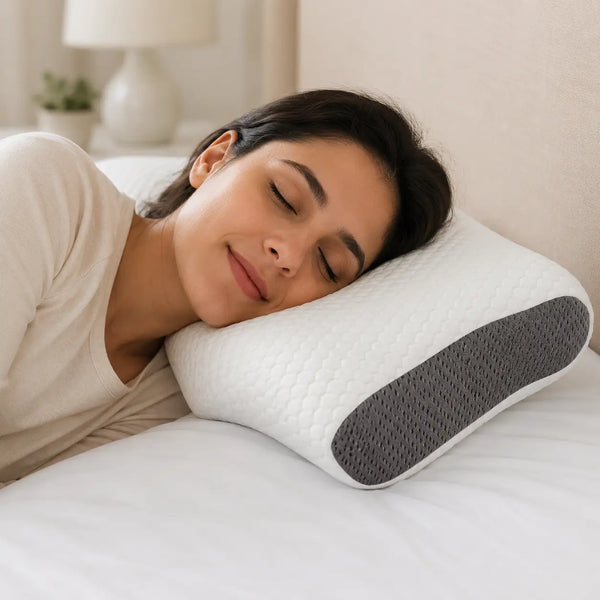
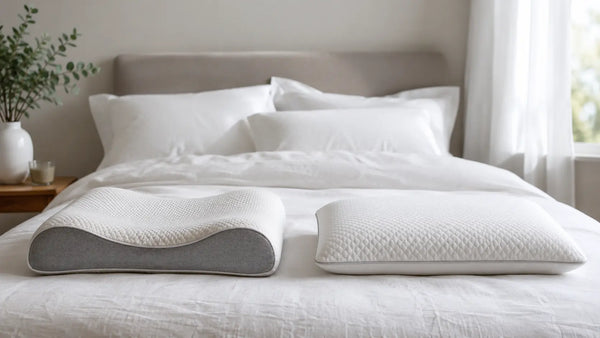
Orthopaedic contour design that supports your cervical spine all night long. If you wake up every morning with a stiff neck, so...
We value your privacy
We use cookies to run the store, remember your preferences and understand how the site is used. Read our Privacy & Cookie Policy.
Functional cookies
Required for the store to work — your cart, checkout and security. These can't be switched off.
Analytical & marketing cookies
Let us measure how the store is used and show you relevant offers — Google Analytics, Meta Pixel and Microsoft Clarity.