The Indian Summer Sleep Problem
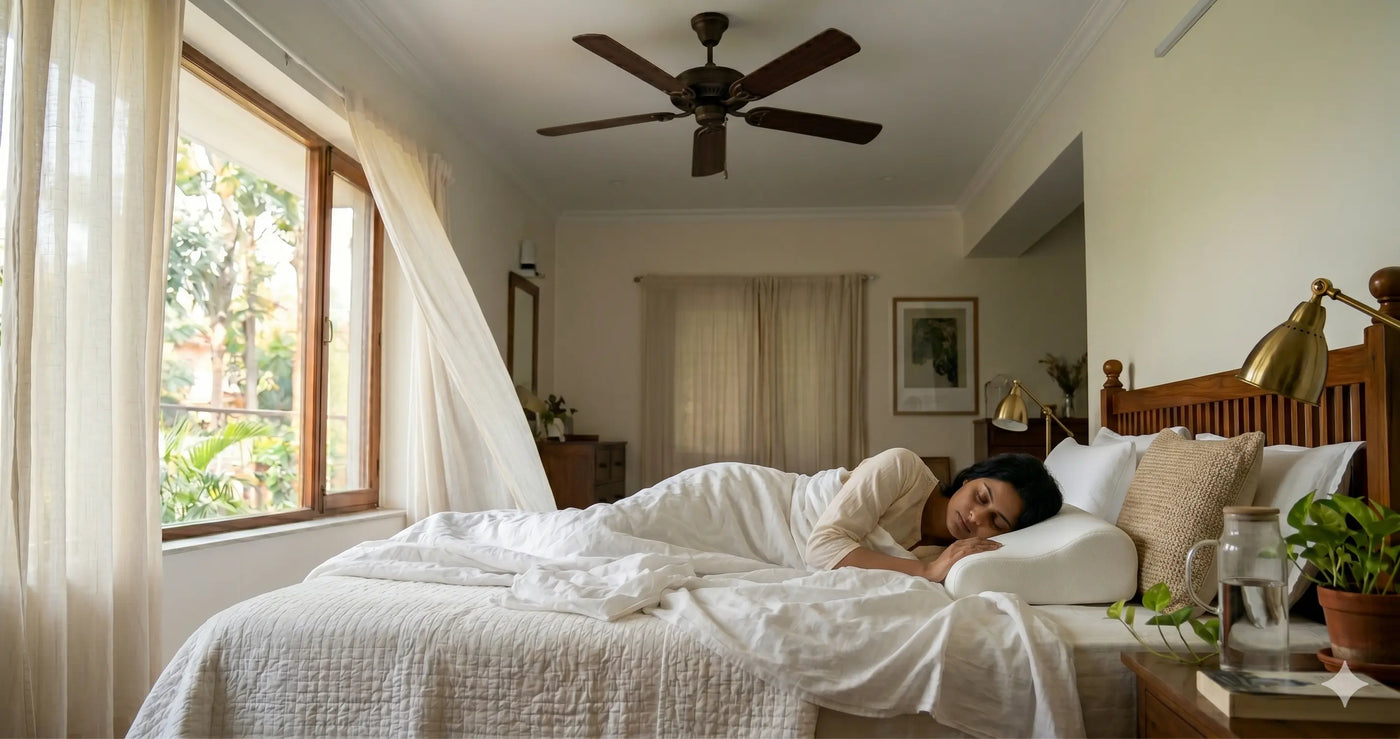
From March to June, the average Indian bedroom temperature climbs to 30–34°C in cities like Delhi, Ahmedabad, Nagpur, and Lucknow. In coastal cities like Chennai and Mumbai, you add high humidity on top. This isn’t just uncomfortable — it’s scientifically proven to destroy sleep quality.
Your core body temperature needs to drop by 1–2°C to initiate deep sleep. In a hot bedroom, your body struggles to offload heat. The result: you lie awake longer, cycle through less deep sleep, and wake up exhausted even after 8 hours in bed.
Most people in India respond by running the AC all night — at significant electricity cost and health concerns. But the more targeted fix is to address your sleeping surface: the pillow and bedding that sit directly against your skin for 7–8 hours.
How Regular Foam Traps Heat at Night
Standard memory foam has a closed-cell structure — the foam molecules are packed tight with minimal air pockets. This is what gives it its “slow sink” feeling. But it’s also what makes it such an effective heat trap.
When you rest your head on a closed-cell foam pillow, body heat transfers into the foam and stays there. The foam has no mechanism to dissipate this heat outward. Within 30–45 minutes, the foam surface can be 3–4°C warmer than room temperature. By midnight in an already-hot bedroom, that’s a 36°C surface against your face.
Studies have shown that sleeping on a heat-trapping surface increases waking during the night by 40% and reduces REM sleep by up to 30% in warm climates. For Indian sleepers in summer, this is not an edge case — it’s a nightly reality for millions.
4 Sleep Mistakes That Make You Even Hotter
Synthetic Polyester Pillowcases
Polyester doesn’t breathe. It traps moisture and heat against your face. In Indian summers, synthetic covers can add another 2–3°C to pillow surface temperatures.
No Air Circulation Near Head
Most people position fans to cool their body. Your head generates significant heat too. A fan aimed at the ceiling above your head helps dissipate pillow heat.
Not Hydrating Before Bed
Dehydration impairs your body’s ability to regulate temperature through sweating. Even mild dehydration (1–2%) makes you feel 1–2°C hotter during sleep.
Using Phone in Bed
Screens emit heat and keep your brain alert. Both raise core body temperature right when you need it to drop. Stop screens 30 minutes before bed.
Open-Cell Foam Technology Explained
Open-cell foam has a fundamentally different molecular structure from regular memory foam. Instead of closed pockets, the cell walls are intentionally perforated, creating an interconnected network of air pockets throughout the foam.
This structure does two things: first, it allows air to circulate through the foam as you move, carrying heat away. Second, it gives the foam a faster response time — it doesn’t sink as slowly as traditional memory foam, so your head doesn’t create a “heat bowl” effect.
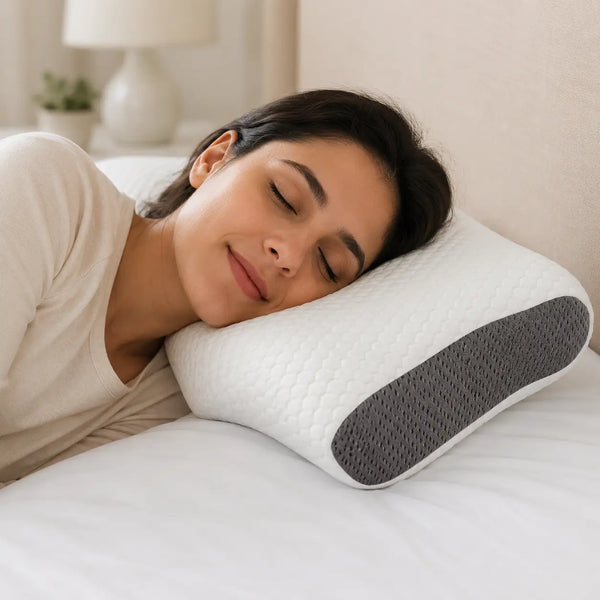
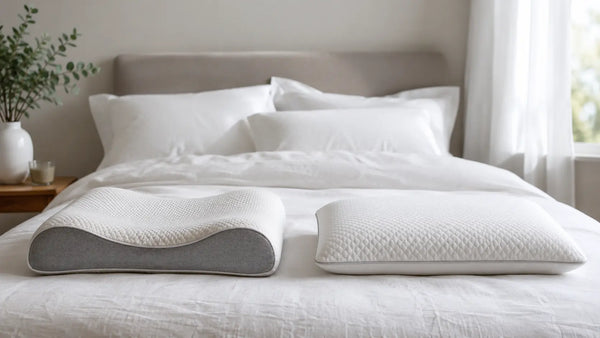
Cosymor’s high-density orthopedic foam uses an open-cell formulation that allows airflow through the core while still providing the firm, consistent support that orthopedic cervical pillows require. It’s a balance that budget foams can’t achieve without sacrificing support.

Why Bamboo Covers Are Perfect for India
Bamboo viscose fabric has properties that make it exceptionally well-suited to Indian sleeping conditions:
- Moisture wicking: Bamboo absorbs moisture 3x faster than cotton, pulling sweat away from your skin and allowing it to evaporate.
- Thermoregulation: The fibre structure naturally adapts to ambient temperature — cooling in summer, insulating in winter monsoon nights.
- Anti-microbial: Bamboo contains a natural bio-agent (bamboo kun) that inhibits bacterial growth — important in humid Indian climates where pillow hygiene matters.
- Softness: Bamboo viscose has a silk-like feel that reduces friction against facial skin — relevant for anyone who wakes with pillow creases or skin irritation.
All Cosymor pillows come with a removable, washable bamboo-blend cover. The cover alone reduces the perceived sleeping surface temperature by approximately 2°C compared to standard cotton covers.
10 Practical Tips to Sleep Cool Without AC
🧣 Sleep Cooling Checklist for Indian Summers
- Switch to a bamboo or cotton cover pillow — avoid polyester
- Place a bowl of ice in front of a table fan before bed — the evaporation cools the room
- Wet your hair slightly before sleeping — evaporation reduces head temperature significantly
- Sleep on the lowest floor available — heat rises in multi-storey homes
- Use light cotton sheets (180–200 thread count) instead of synthetic blends
- Keep blinds and curtains closed during the day to reduce solar heat gain
- Take a lukewarm (not cold) shower before bed — cold showers cause rebound warming
- Drink 200–300 ml of water 30 minutes before bed
- Cross-ventilate if you have windows on opposite walls — even at night, this helps
- Consider the Egyptian method: soak a thin sheet in cold water, wring out, sleep under it
Regular Foam vs Cosymor for Indian Summers
| Feature | Standard Foam Pillow | Cosymor Orthopedic Pillow |
|---|---|---|
| Foam Structure | Closed-cell — traps heat | Open-cell — allows airflow |
| Surface Temperature Increase | +3–4°C over room temp | +0.5–1°C (near ambient) |
| Cover Material | Polyester/synthetic blend | Bamboo-blend — moisture wicking |
| Washable Cover | Varies | Yes — removable, machine wash |
| Performance in 30°C+ Rooms | Very poor | Good |
| Humidity Resistance | Absorbs moisture, harbours bacteria | Bamboo kun — natural anti-microbial |
What Indian Customers Say About Summer Sleeping
“Chennai summers are brutal and I was flipping my pillow every hour. The Cosymor pillow with bamboo cover stays cool the entire night. I have stopped running AC on full and my electricity bill has noticeably dropped.”
“I was very sceptical that a pillow cover could make such a difference in Delhi heat. But honestly the bamboo cover stays cool to the touch much longer than regular cotton. First summer in years I have slept properly.”
“Nagpur hits 44°C in May. I cannot afford AC all night so I was looking for cooling bedding solutions. This pillow stays noticeably cooler than my old foam one. Combined with a cotton bedsheet, actually quite comfortable even in peak summer.”
Sleep Cooler This Summer — Starting With Your Pillow
The single most impactful thing you can do for summer sleep quality (beyond AC) is replace your heat-trapping foam pillow with one designed for warm climates. Open-cell foam and a bamboo cover can reduce your perceived sleeping surface temperature by 3–5°C.
- Regular foam adds 4°C to surface temperature — devastating in Indian summers
- Open-cell foam allows airflow and dissipates heat naturally
- Bamboo covers wick moisture 3x faster than cotton and resist bacterial growth
- Combine with proper ventilation and pre-bed routines for best results
- Cosymor’s bamboo pillow is priced for Indian households at ₹1,499–₹2,299