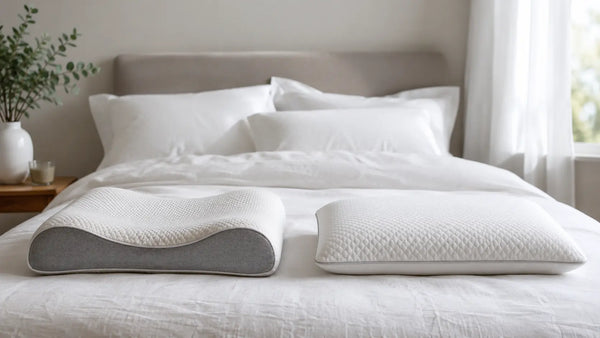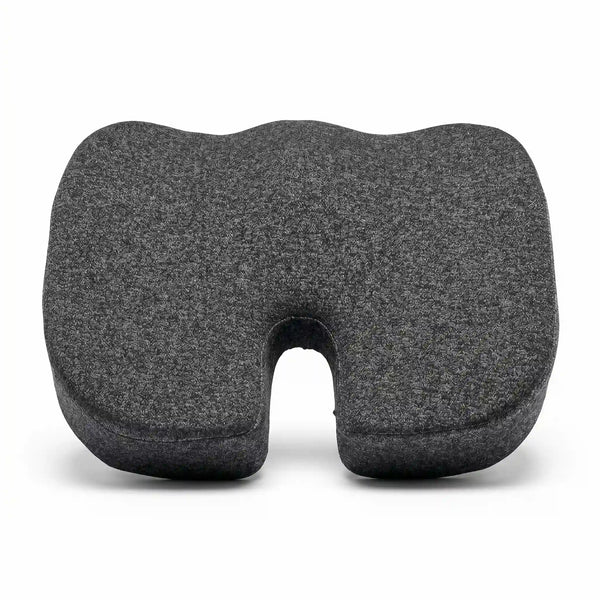
Ergonomic COCCYX Seat Cushion for Tailbone Pain Pressure Relief
★★★★★
Tailbone relief and posture support engineered for long hours of sitting. Long hours of sitting shouldn't mean pain. Our Premiu...
Waking up stiff isn't about how you slept — it's about what you slept on. Here's how neck alignment works and which memory foam pillow solves it.
If your neck is stiff before your feet even hit the floor, the problem usually isn't your mattress, your age, or how you slept. It's the eight hours your neck spent unsupported — and that comes down to your pillow. Here's what's actually happening up there, what customers tell us, what doctors and physiotherapists advise, and how the right pillow breaks the cycle.
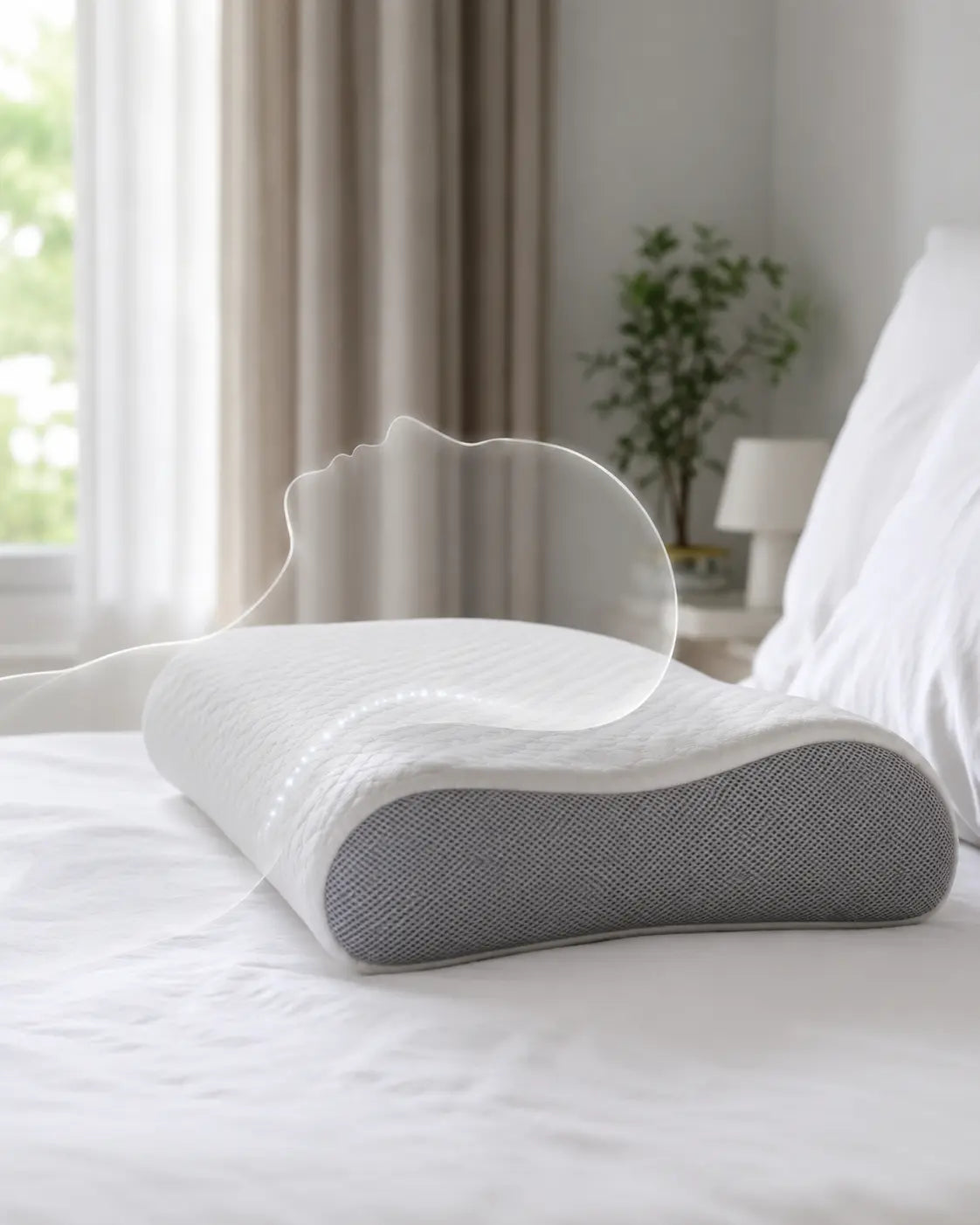
Your cervical spine — the seven vertebrae in your neck — isn't straight. It has a gentle inward curve called the cervical lordosis. During the day, the muscles and ligaments around it hold your head (a surprisingly heavy 4.5–5.5 kg) in balance. At night, those muscles are supposed to switch off and rest. They can only do that if something else holds your head in its neutral, curved position instead.
When your pillow is too flat, your head drops back and the curve flattens. When it's too tall, your chin is pushed toward your chest. Either way the muscles never fully switch off — they spend the whole night gently straining to hold your head where the pillow won't. You wake up stiff, sometimes with a headache, and it eases an hour later once you start moving. That “eases after moving” pattern is the classic fingerprint of a pillow problem rather than a structural one.
Modern life makes this worse. Hours hunched over a laptop or phone pull the head forward — a posture researchers call “forward head posture” or “text neck.” It increases the mechanical load on the cervical spine and quietly weakens the deep muscles that stabilise your neck, so by bedtime your neck is already tired before you lie down.
After thousands of conversations, the same handful of complaints come up again and again. You'll probably recognise at least one:
“I wake up every morning with a stiff neck and have to roll my shoulders for ten minutes before it loosens up.”
— the most common one we hear“My pillow feels fine when I lie down, but by 3 a.m. it's gone flat and my head is basically on the mattress.”
— the flattening-pillow complaint“I'm a side sleeper and I wake up with a sore shoulder and a cricked neck on one side.”
— the shoulder-gap complaint“I've been diagnosed with cervical spondylosis and ordinary pillows make it worse.”
— the medical complaintOrthopaedic doctors and physiotherapists tend to agree on the fundamentals of sleep posture, even when they differ on treatment:
Keep the neck neutral. The goal is to keep your cervical spine in the same gentle curve it has when you're standing with good posture — not bent forward, not tipped back. Match pillow height to sleep position. Side sleepers need a higher loft to fill the shoulder-to-head gap; back sleepers need a lower pillow with support under the neck curve; stomach sleeping is generally discouraged because it forces the neck to rotate. Support, don't just cushion. A pillow that collapses gives comfort for a moment and no support for the night. And alongside the right pillow, physios stress daytime basics — raising your screen to eye level, taking movement breaks, and strengthening the deep neck muscles.
The through-line: a good pillow doesn't “treat” anything on its own, but it removes the single biggest source of overnight strain so the muscles can finally rest and recover.
This is exactly the gap a well-designed memory foam pillow is built to close. Three things make the difference:
A contoured pillow is shaped to sit under the natural curve of your neck, so your head is cradled and the cervical spine stays in its neutral position. There's no unsupported gap for the muscles to compensate for — they can switch off and rest. Our Cervical Memory Foam Pillow uses a dual-lobe contour with two height zones, so back and side sleepers can each find their fit.
The reason ordinary pillows fail at 3 a.m. is density. Low-density fibre and cheap foam compress under the weight of your head and stay compressed. High-density memory foam responds to warmth and pressure, then springs back — so the support you feel when you lie down is still there hours later. A quick test: press your fist into your current pillow and lift it. If the dent takes more than about three seconds to recover, the foam is spent and no longer supporting you.
Memory foam spreads the weight of your head across the whole surface instead of concentrating it on one point. That even distribution is part of why people who get tension headaches on waking often feel the difference first — no single spot of the neck is taking all the load.
Side sleepers with a sore shoulder usually do best with the structured, raised-lobe support of the Orthopaedic Contour Pillow, whose butterfly shape fills the shoulder gap. If you run hot — and in Indian summers most of us do — the Cooling Memory Foam Pillow adds 360° airflow so heat doesn't build up under your neck. Combination sleepers who move around all night tend to prefer the smooth, adaptable support of the Memory Foam Neck Pain Pillow.
Dual-lobe orthopaedic contour with two height zones. Supports the neck curve for back and side sleepers.
Shop now →Butterfly shape with raised shoulder lobes that fill the shoulder-to-head gap. Firm, defined support.
Shop now →360° mesh airflow band keeps the pillow cool through humid Indian nights, without losing support.
Shop now →Even, medium-firm support that adapts as you switch positions. A safe first upgrade for most people.
Shop now →Use a breathable cotton pillow cover, air the foam occasionally, and spot-clean rather than soaking it (memory foam shouldn't be wrung out). Cared for well, high-density foam holds its support for years rather than months. Browse the full range of Pillows & Cushions or the focused Cervical & Contour and Orthopedic collections.
This article is general information, not medical advice. Persistent or severe neck pain, numbness, or pain radiating into the arms should be assessed by a doctor or physiotherapist — a pillow is one piece of the picture, not a diagnosis.
Find the pillow that matches how you sleep — and give your neck the night off.
Shop All Pillows →Tailbone relief and posture support engineered for long hours of sitting. Long hours of sitting shouldn't mean pain. Our Premiu...
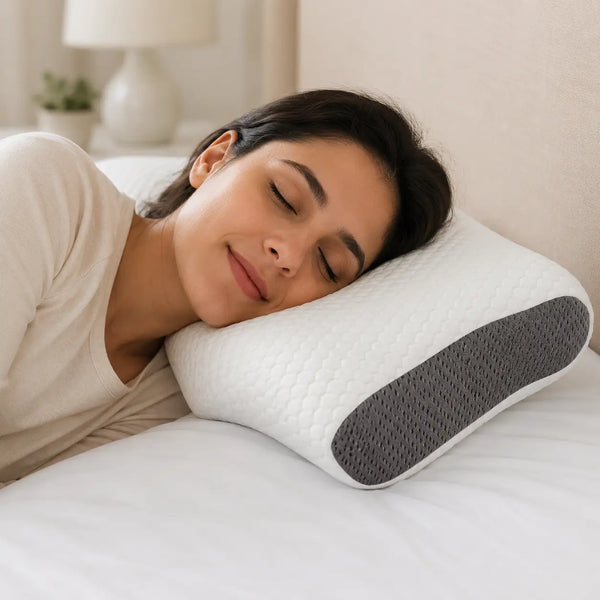
Orthopaedic contour design that supports your cervical spine all night long. If you wake up every morning with a stiff neck, so...
We value your privacy
We use cookies to run the store, remember your preferences and understand how the site is used. Read our Privacy & Cookie Policy.
Functional cookies
Required for the store to work — your cart, checkout and security. These can't be switched off.
Analytical & marketing cookies
Let us measure how the store is used and show you relevant offers — Google Analytics, Meta Pixel and Microsoft Clarity.